Meet...
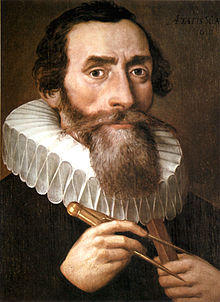
Johannes Kepler
Born - December 27, 1571, Weil der Stadt, Württemberg
Died - November 15, 1630, Regensburg
Work
Kepeler's Books
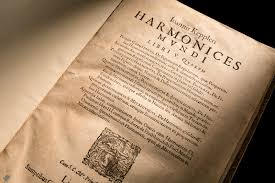
Harmonices Mundi
Kepler discusses harmony and congruence in geometrical forms and physical phenomena.
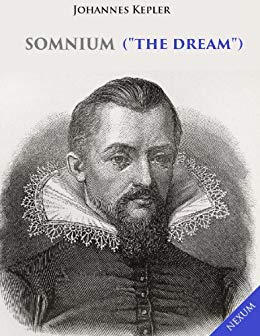
Somnium "The Dream"
The eminent astronomer Johannes Kepler imagines a trip to the moon and speculates about its inhabitants.
Astronomia nova
Contains the results of Kepler's ten-year-long investigation of the motion of Mars.
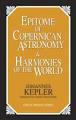
Epitome of Copernican astronomy
an astronomy book on the heliocentric system
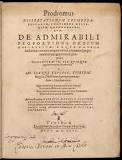
Mysterium Cosmographicum
This book theorizes the distance relationships between the six planets (only six were known) could be represented by six spheres separated by the five Platonic solids.

The six-cornered snowflake
Provides the first published evidence of the ideas of regular arrangements and close-packing which have proved fundamental to crystallography
& many, MANY more.
Theories & Discoveries
Developed the 3 major laws of planetary motion
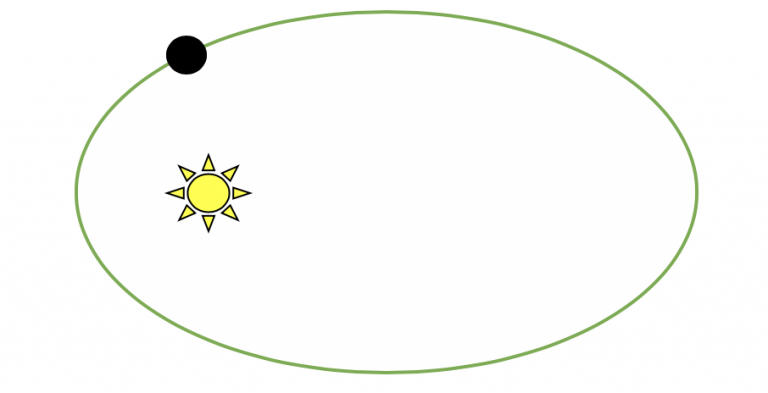
(1) the planets move in elliptical orbits with the Sun at one focus
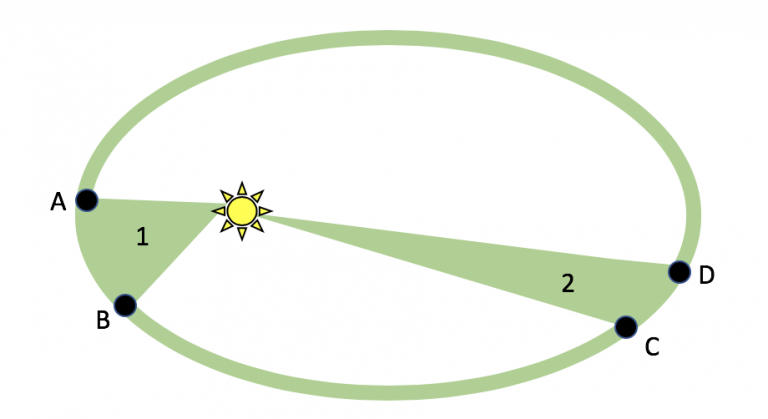
(2) the time necessary to traverse any arc of a planetary orbit is proportional to the area of the sector between the central body and that arc (the “area law”)
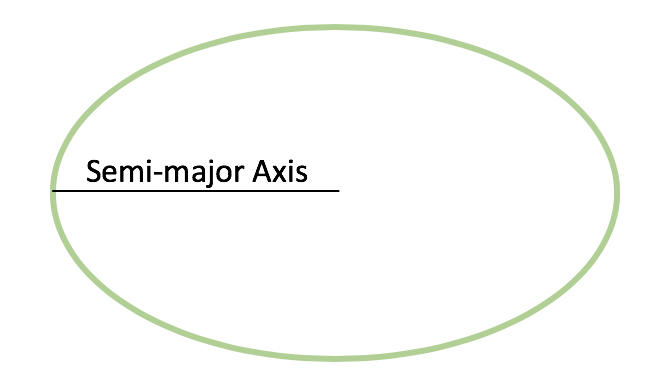
(3) there is an exact relationship between the squares of the planets’ periodic times and the cubes of the radii of their orbits (the “harmonic law”)
Provided a new and correct account of how vision occursDeveloped a novel explanation for the behaviour of light in the newly invented telescopeDiscovered several new, semiregular polyhedronsOffered a new theoretical foundation for astrology while at the same time restricting the domain in which its predictions could be considered reliable.
Kepler's Life
Born on December 27, 1571, in Weil der Stadt, Württemberg. (pronounced Vile dare Stat Vurtenbearg.)
Was born into a poor family
Went to the University of Tübingen (pronounced Tubinghen) to study for the Lutheran ministry.
Was Introduced to the ideas of Copernicus while there
While he was a Math Teacher Graz, In 1596 he wrote the first outspoken defense of the Copernican system
His family was Lutherian but he did not adhere to the Lutheran position on the real presence and refused to sign the Formula of Concord.
Because of this he was excluded from the sacrament in the Lutheran church.
This and his refusal to convert to Catholicism left him alienated by both the Lutherans and the Catholics.
Kepler moved to Prague to work with danish astronomer Tycho Brahe
He inherited Tycho's post as Imperial Mathematician when Tycho died in 1601
Kepler discovered that the orbit of Mars was an ellipse.
Publised Astronomia Nova in 1609
Basically made the scientific method
Was forced out of prague in 1612
Wife and two kids died
remarried, but got into financial troubles and personal troubles
and, his 2 infant daughters died.
went to Württemburg to defend his mother for witchcraft
published another book, Harmonices Mundi in 1619
Posted more books
Died in 1930 on his way to Sagan to collect debt
"I much prefer the sharpest criticism of a single intelligent man to the thoughtless approval of the masses"
Nature uses as little as possible of anything.
Truth is the daughter of time, and I feel no shame in being her midwife.
"... the ways by which men arrive at knowledge of the celestial things are hardly less wonderful than the nature of these things themselves"
I demonstrate by means of philosophy that the earth is round, and is inhabited on all sides; that it is insignificantly small, and is borne through the stars.
a List of Kepler's Firsts
First to correctly explain planetary motionFirst to investigate the formation of pictures with a pin hole cameraFirst to explain the process of vision by refraction within the eyeFirst to formulate eyeglass designing for nearsightedness and farsightednessFirst to explain the use of both eyes for depth perception.First to describe: real, virtual, upright and inverted images and magnificationFirst to explain the principles of how a telescope worksFirst to discover and describe the properties of total internal reflection.Formed the basis of integral calculus.First to explain that the tides are caused by the MoonTried to use stellar parallax caused by the Earth's orbit to measure the distance to the starsFirst to suggest that the Sun rotates about its axis in Astronomia NovaFirst to derive the birth year of Christ, that is now universally accepted.First to derive logarithms purely based on mathematicsCoined the word "satellite"
Text